
Entities in the APIs
Entities
Account
An account is the technical representation of any user accessing the platform. It’s the mean for the user to access any application of Tokeny. Without any business logic behind, its sole purpose is authentication.
Financial world equivalent: Account used to access a web banking application.
Identity
An identity is the set of KYC data collected by Tokeny during the onboarding of a user participating in a token sale. Such a user will later be called a holder (see below). All investors in a token have one identity, represented on the blockchain by an ONCHAINID.
Financial world equivalent: KYC data, investor profile…
Holder
An holder is any user having been accepted in a token sale. One holder is always contextualised to a token, meaning that the same user, with the same identity, will be considered as a different holder depending on the token that the issuer is managing.
Financial world equivalent : Shareholder in a specific company.
Wallet
A wallet is the wallet address used by a holder to receive the position of a token. The same wallet can be used by different holders but always by the same identity. A position in the cap table will always be represented by the couple (holder, wallet).
Token
A token is the representation of the financial asset on the blockchain.
Token balance
The token balance is the position in the token held by a holder on their wallet.
Owner
The owner of a token is the user managing the agents on the token. It’s an account with an additional business logic allowing them to add and remove agents on the token.
Agent
Agents of a token are the users managing the cap table of the asset. It’s a set of accounts with an additional business logic allowing them to control the supply of the token and the current and future holders.
Token Creator
They are the ones that can create tokens for the issuer, and deploy them. When they create a token, they can configure Token info, define the Token ownership, Identify eligibility and advances settings. They can assign themselves as owners if desired.
Issuer Admin
They are the ones that can access and configure the platform settings and the investor app settings. They can also access the rest of the token settings in read-only mode within Servicing application.
Diagrams
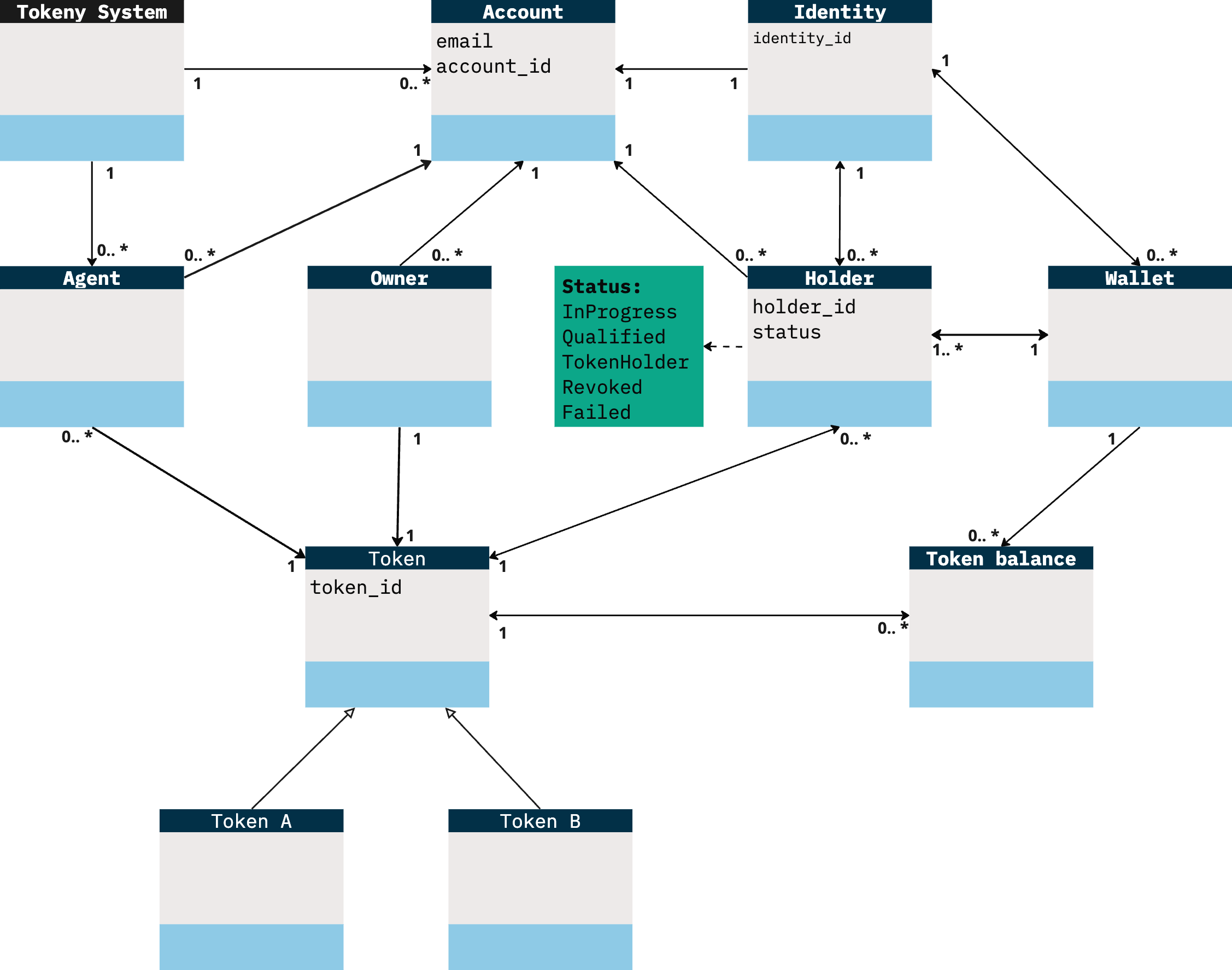
Entity mapping diagram
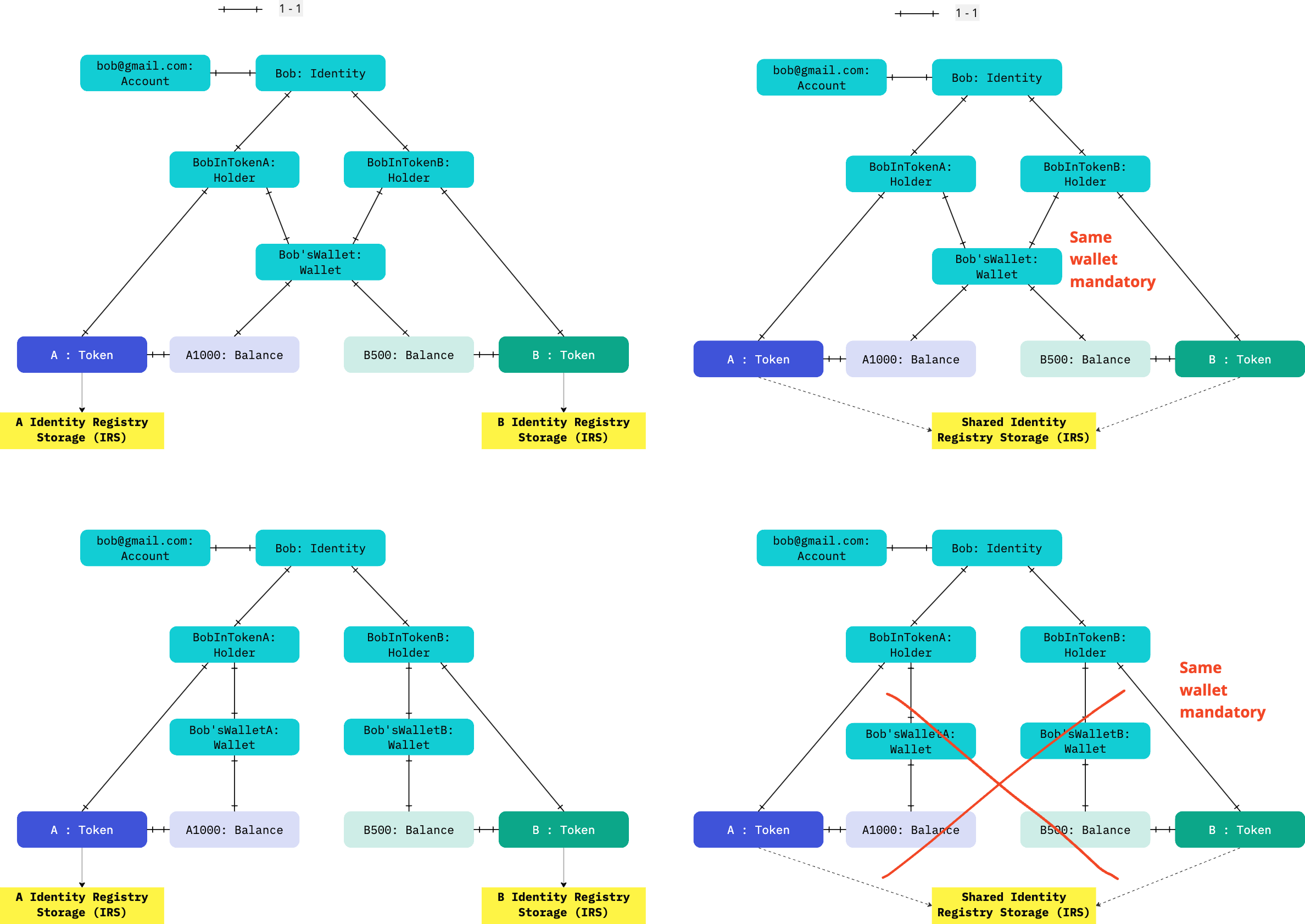
The above diagrams simply means that, if multiple tokens share the same IRS (allocator/investor whitelist), then the Holders of these tokens will need to use a single wallet for all the tokens. If each token has its own IRS, then allocators/investors can use a different wallet per token.
Updated 5 months ago